
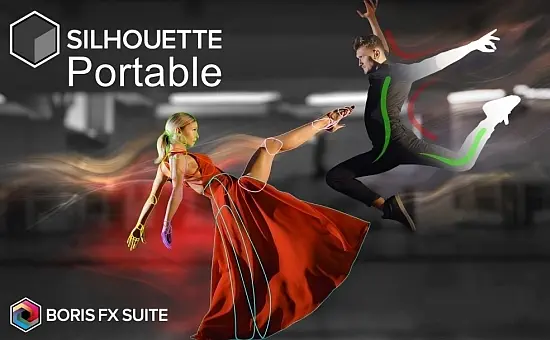
The 2026.0.3 release of the renowned compositing suite continues the tradition of delivering Hollywood‑grade visual effects tools to post‑production houses worldwide. Built on a GPU‑accelerated core, the application offers real‑time feedback while handling the massive data sets typical of blockbuster projects, from sci‑fi epics to high‑budget streaming series. Its node‑based architecture lets artists construct intricate pipelines without sacrificing speed, making it a go‑to choice for studios that demand both precision and scalability.
Beyond raw power, the platform embraces a philosophy that blends artistic freedom with intelligent automation. Integrated AI modules accelerate repetitive tasks, while a modern 3D environment expands compositing possibilities beyond the traditional 2D plane. A modular UI lets teams tailor the workspace to specific workflows, ensuring that every artist can focus on storytelling rather than technical bottlenecks.
Rotoscoping and Matte Creation
The rotoscoping engine remains a benchmark for accuracy, offering spline‑based shapes that support variable feathering, per‑point motion, and hierarchical parenting. Artists can craft complex masks that adapt to subtle motion changes, while the point‑driven animation system streamlines the placement of vertices across thousands of frames. The module also provides three distinct quality tiers, allowing users to start with rapid block‑outs and progressively refine mattes to sub‑pixel precision.
Machine‑learning‑enhanced keyframing reduces manual effort by analyzing footage and propagating matte adjustments automatically. This AI assistance identifies edge patterns and predicts how masks should evolve, cutting down frame‑by‑frame labor dramatically. Combined with a flexible node graph, the rotoscoping suite integrates seamlessly with downstream compositing stages, ensuring that matte data remains non‑destructive and fully editable throughout the pipeline.
Node‑Based Painting and Restoration
Painting tools are organized as nodes, preserving every stroke in a reversible stack that can be revisited at any stage. This non‑destructive approach empowers artists to experiment freely, knowing that changes can be undone without compromising the original footage. A diverse brush library—including clone, healing, and reveal brushes—mirrors traditional media techniques while leveraging digital flexibility for intricate restoration work.
Support for 32‑bit float linear data ensures that color fidelity and dynamic range meet cinema standards, even when working with HDR sources. The paint system also integrates directly with the compositing graph, allowing artists to blend retouching operations with color grading, keying, or particle effects without leaving the node environment.
Integrated 3D Compositing Workflow
A dedicated 3D scene node brings true spatial awareness to the compositing process. Users can import Alembic or FBX assets, including production cameras and geometry, and position 2D elements on virtual cards that respect real‑world perspective. This capability simplifies tasks such as set extensions, rig removals, and projection‑based paint fixes.
The unproject/reproject workflow lets artists paint on a stabilized, undistorted reference frame and then map the results back onto the original moving footage. Additionally, 3D‑to‑2D track conversion enables legacy pipelines to benefit from modern 3D data, providing a bridge between traditional point‑track methods and full‑scene integration.
AI‑Enhanced Automation Tools
Artificial‑intelligence modules accelerate the most tedious aspects of VFX work. Matte Refine ML smooths hard edges while preserving fine details like hair or lace. Depth Map Generation creates per‑pixel depth from flat plates, unlocking selective focus and relighting without manual rotoscoping. Frame Fixer detects corrupted frames and reconstructs them using context‑aware synthesis, and PowerMesh Morph blends complex surface deformations using data from advanced mesh trackers.
- Matte Refine ML – smooths edge transitions while preserving fine details.
- Depth Map Generation – creates per‑pixel depth from flat footage for selective effects.
- Frame Fixer – automatically repairs corrupted or damaged frames.
- PowerMesh Morph – blends complex surface deformations using mesh tracking data.
- Smart Roto Assist – suggests mask shapes based on motion analysis.
These AI tools are fully integrated into the node graph, allowing artists to chain them with traditional operations or expose parameters for custom scripting. Python support and expression‑based controls let studios embed the intelligence into automated pipelines, ensuring consistent results across large productions while still granting artists the ability to intervene manually when creative nuance is required.
Performance, Collaboration, and Pipeline Integration
GPU acceleration drives both viewport interaction and heavy‑weight computations such as AI inference, batch rendering, and complex warps, delivering frame‑rate‑smooth previews even on high‑resolution plates. Batch processing utilities enable studios to apply node graphs across entire shot lists, while external node libraries and compound sharing foster a collaborative environment where standardized setups circulate effortlessly between departments.
The suite adheres to ACES 2.0 and OpenColorIO 2.2 standards, guaranteeing color consistency from acquisition to delivery. Integrated nodes for Sapphire, Mocha Pro, and Particle Illusion expand the creative palette without leaving the graph, and a robust Python API empowers technical directors to automate repetitive tasks, generate custom tools, and embed the application within larger asset‑management frameworks.