
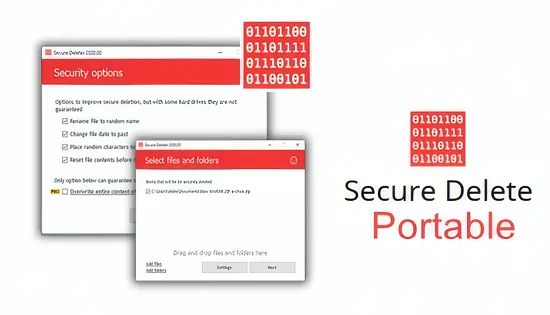
In today’s data‑driven world, the ability to permanently remove confidential files is as critical as creating them. Secure Delete Professional v221 offers a purpose‑built solution that overwrites digital remnants, guaranteeing that deleted information cannot be resurrected by recovery utilities. The tool follows internationally recognized sanitization guidelines, making it a trustworthy ally for anyone who must protect personal or corporate data from accidental exposure.
Designed with a multilingual interface and a lightweight, portable architecture, the application fits comfortably on a USB stick or corporate image. Whether an individual is clearing a personal laptop before resale or an enterprise is purging customer records to meet regulatory mandates, the software balances simplicity with deep technical rigor.
How Secure Deletion Works
Unlike a conventional delete operation that merely removes directory entries, this utility overwrites the actual storage sectors with random patterns. It can execute multiple passes, each pass replacing the original bits with new data, thereby eliminating any residual magnetic imprint that forensic tools might otherwise exploit. The process is fully automated, yet users retain control over the number of passes to match their security posture.
After the overwriting routine finishes, the program optionally verifies the integrity of the operation, confirming that every targeted sector was successfully sanitized. This verification step adds an extra layer of confidence, ensuring that even sophisticated recovery methods cannot reconstruct the erased content.
Supported Erasure Standards
The application incorporates a suite of vetted algorithms, each aligned with a specific industry or governmental guideline. Users can select the method that best balances speed and security, from quick single‑pass wipes to exhaustive multi‑pass routines designed for legacy media. This flexibility makes the tool suitable for a broad spectrum of compliance scenarios.
- DoD 5220.22‑M (E and ECE variants) – U.S. Department of Defense standard.
- Gutmann 35‑Pass – Comprehensive overwrite for older magnetic drives.
- NIST SP 800‑88 – Modern best‑practice guidelines for data sanitization.
- German BSI Standard – European‑focused wiping protocol.
Choosing a method is straightforward: a three‑pass DoD cycle offers solid protection for most business needs, while the Gutmann routine is reserved for highly sensitive environments where maximum assurance is required. The software automatically adjusts the pass count based on the selected standard, eliminating guesswork for the operator.
Targeted Data Sanitization Options
Secure Delete Professional v221 can address a wide array of data containers. Individual files, entire folders, whole partitions, and even the system recycle bin are all eligible for secure wiping. In addition, the tool can purge browser histories, cache files, and other temporary artifacts that often linger after normal deletions.
For scenarios such as device resale, decommissioning, or compliance audits, the free‑space cleaning feature scans unallocated sectors and overwrites any remnants of previously deleted files. This comprehensive approach ensures that no hidden fragments survive, delivering peace of mind for both personal and enterprise users.
Optimized Handling for SSDs
Solid‑state drives store data differently from magnetic disks, and repeated overwriting can accelerate wear. Recognizing this, the software detects SSDs automatically and switches to a TRIM‑based erasure mode. The TRIM command signals the drive’s firmware to discard blocks, allowing the built‑in garbage collector to securely eliminate data without excessive write cycles.
When an SSD is identified, the application disables traditional multi‑pass overwrites, preserving the drive’s lifespan while still meeting security expectations. Users can still opt for a limited overwrite pass if they prefer an extra safeguard, but the default SSD‑aware routine provides an optimal balance of safety and durability.
Reporting, Auditing, and Enterprise Benefits
Each deletion session generates a detailed log that captures the file names, selected erasure method, timestamps, and optional user comments. These logs can be exported for archival purposes, supporting regulatory audits such as GDPR, HIPAA, or PCI‑DSS. The reporting feature also facilitates internal compliance checks and forensic readiness.
Beyond compliance, the software’s multilingual UI, context‑sensitive help, and customizable warning dialogs make it accessible to users of varying technical skill levels. Batch processing capabilities allow administrators to queue large data sets, while pause and cancel controls provide granular command over ongoing sanitization tasks.