
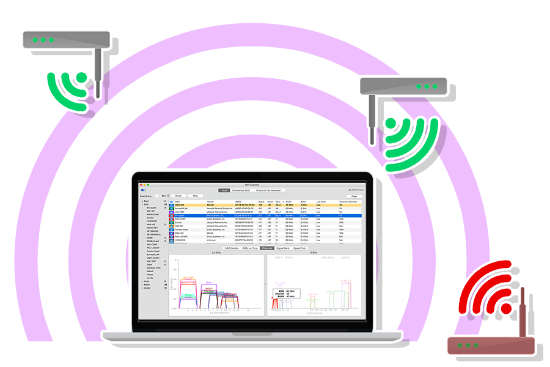
Modern enterprises rely on dense, high‑speed wireless infrastructures to support everything from video conferencing to IoT telemetry. As the number of access points and client devices grows, administrators need a single pane of glass that can surface performance bottlenecks, security gaps, and coverage blind spots before they impact users. The latest release of this scanner delivers that visibility, combining real‑time radio analysis with deep packet inspection to give IT teams the data they need to keep networks humming.
Built to run on Windows workstations, the tool packs a portable engine that can be launched without lengthy installations, making it ideal for on‑site troubleshooting or remote audits. Version 2.9.8.563 expands support for emerging 6 GHz spectrum, adds refined heat‑mapping algorithms, and introduces a more intuitive dashboard that balances power‑user depth with a gentle learning curve for less‑technical staff.
Security is woven into the scanning engine, which continuously checks for unauthorized access points masquerading as legitimate infrastructure. The software cross‑references detected BSSIDs against a whitelist, flags rogue APs, and highlights clients attempting to connect using weak or outdated encryption protocols.
When a potential breach is identified, the scanner generates real‑time alerts and logs detailed evidence—including timestamps, signal strength, and associated SSIDs—so that security teams can quickly quarantine compromised devices and enforce compliance with corporate wireless policies.
Coverage Mapping and Capacity Planning
Heat‑mapping capabilities translate raw signal data into visual maps that illustrate coverage strength across floor plans or outdoor sites. Areas of weak reception appear in cooler tones, guiding planners to reposition or add access points for uniform service.
Predictive modeling tools use current utilization trends to forecast future capacity needs, helping organizations budget for additional spectrum or hardware before user demand outpaces supply. This forward‑looking approach reduces the risk of sudden performance cliffs during peak usage periods.
Scalability, Integration, and Export Options
The solution scales from single‑site deployments to multi‑location enterprises, supporting remote sensors such as WLAN Pi, Raspberry Pi, or any Linux‑based device that can act as a distributed scanner. This flexibility enables centralized monitoring of geographically dispersed networks without sacrificing detail.
- Export raw scan data to CSV for spreadsheet analysis.
- Generate HTML summary reports with embedded charts for quick stakeholder review.
- Integrate findings via API hooks into existing network‑management platforms.
- Apply custom labels to access points for easier identification in large inventories.
All exported formats are compatible with popular analytics tools, allowing IT teams to blend wireless insights with broader infrastructure metrics. Combined with its intuitive UI, the scanner delivers enterprise‑grade functionality without the steep learning curve traditionally associated with professional Wi‑Fi analysis suites.