
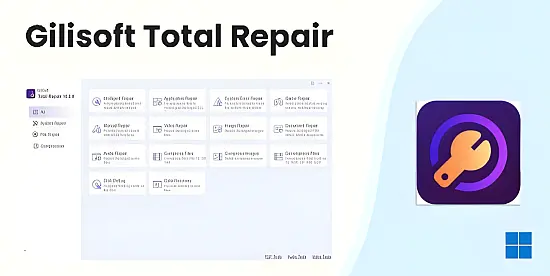
Gilisoft Total Repair 12.0.0 consolidates a suite of maintenance utilities into a single, portable package designed for Windows PCs. By blending AI‑assisted diagnostics with a streamlined user interface, it tackles everything from missing DLL files to sluggish boot times, delivering a comprehensive health check without the need for separate tools. The solution targets both home users and IT professionals, promising a reduction in manual troubleshooting while preserving system integrity.
The portable nature of the toolkit means it can be launched from a USB stick on any compatible machine, eliminating installation overhead. Its architecture separates an “intelligent” mode for automated remediation and a “manual” mode for granular control, allowing users to choose the level of intervention that best fits their expertise and the severity of the issue.
One‑Click Automated Repair
At the core of the application lies a one‑click repair engine that scans the operating system, identifies over five hundred common faults, and applies corrective actions automatically. The engine examines registry entries, system files, and library dependencies, then replaces or restores any corrupted components it discovers. This hands‑off approach is especially valuable for users who lack deep technical knowledge, as it removes the guesswork from routine maintenance.
Beyond simple fixes, the engine also monitors background services and optimizes startup routines to prevent future slowdowns. By caching a regularly updated library of DLLs and system patches, the tool can address newly emerging errors without requiring a full software update, keeping the repair process both swift and current.
Deep System Diagnostics and Fixes
The diagnostic module conducts a thorough sweep of critical Windows components, pinpointing issues such as blue‑screen triggers, corrupted system files, and registry anomalies. It cross‑references findings with an internal knowledge base, then offers targeted repairs that restore stability without overwriting unaffected settings. This depth of analysis helps prevent recurring crashes that generic cleaners often miss.
- Detects and resolves BSOD‑related driver conflicts.
- Rebuilds damaged system file caches.
- Repairs malformed registry keys.
- Optimizes memory allocation for smoother multitasking.
- Generates a concise health report for IT documentation.
After the automated fixes, users can review a detailed log that outlines each action taken, providing transparency and auditability for corporate environments. Advanced operators may also invoke the manual repair pane to fine‑tune specific parameters, such as adjusting service start types or applying custom driver updates, ensuring the tool adapts to specialized workflows.
Game Performance Enhancement
Gamers benefit from a dedicated module that aligns system resources with the demanding needs of modern titles. The utility automatically updates DirectX, Visual C++ redistributables, and other runtime libraries, eliminating version mismatches that often cause crashes or stuttering. It also clears residual game caches and optimizes graphics settings based on detected hardware capabilities.
Benchmarks reported by users show frame‑rate gains ranging from ten to twenty‑five percent after a single optimization pass, along with noticeably shorter load times. By applying selective memory defragmentation and prioritizing game‑related processes, the module creates a smoother, more responsive gaming experience without requiring manual tweaking.
Multimedia and Document Recovery
Corrupted media files can be a major setback for creators, and the software’s AI‑driven recovery engine addresses this gap. Using pattern‑recognition algorithms, it reconstructs damaged JPEG, PNG, MP4, and DOCX files, restoring visual fidelity and data integrity wherever possible. The process runs locally, ensuring privacy for sensitive content.
While success rates vary with the extent of corruption, the tool typically salvages upwards of ninety percent of affected files, dramatically reducing the need for costly third‑party recovery services. Users can batch‑process entire folders, receiving a summary of recovered versus unrecoverable items at the end of each session.
Disk Management and Compression Tools
The suite includes a dual‑mode defragmentation engine that distinguishes between HDDs and SSDs. Traditional fragmentation removal is applied to spinning drives, while solid‑state devices receive TRIM commands to reclaim unused blocks and maintain optimal write performance. This tailored approach prolongs drive lifespan and improves overall I/O speed.
Complementing the defragmenter is a versatile compression toolkit supporting formats such as ZIP, RAR, 7Z, and others. Users can create encrypted archives for secure data transfer or decompress received files without leaving the application. By consolidating these utilities, the portable package eliminates the need for separate third‑party archivers.